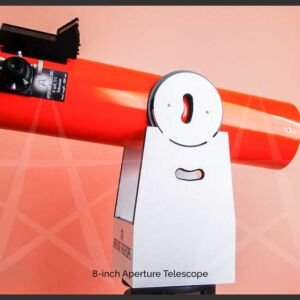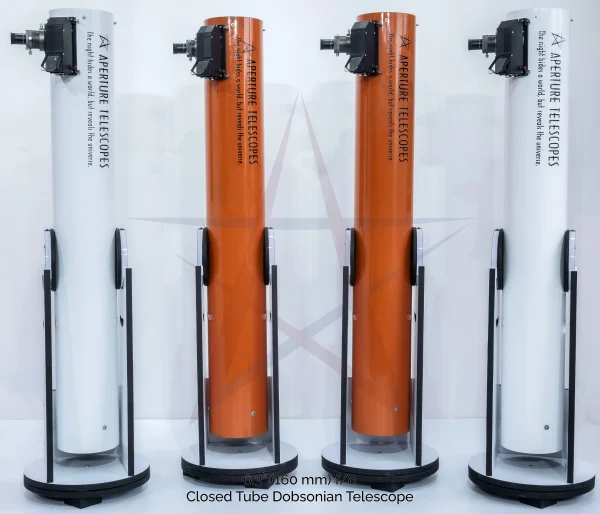
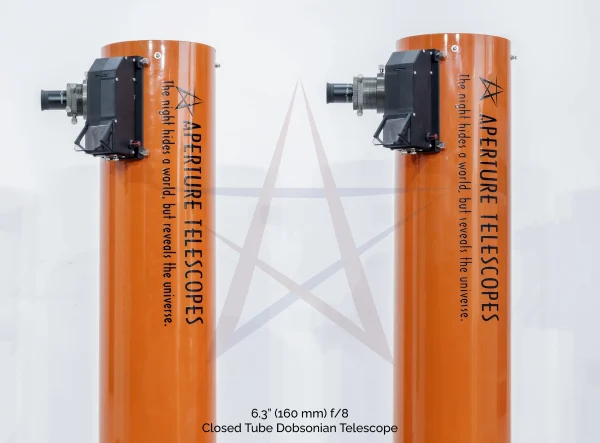
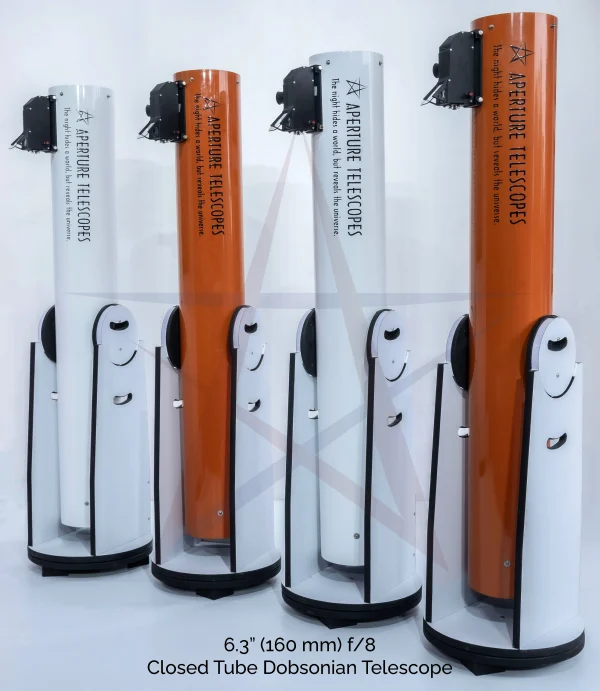
6.3-inch Aperture Telescope

6.3-inch Aperture Telescope

30,000.00

Price includes GST 

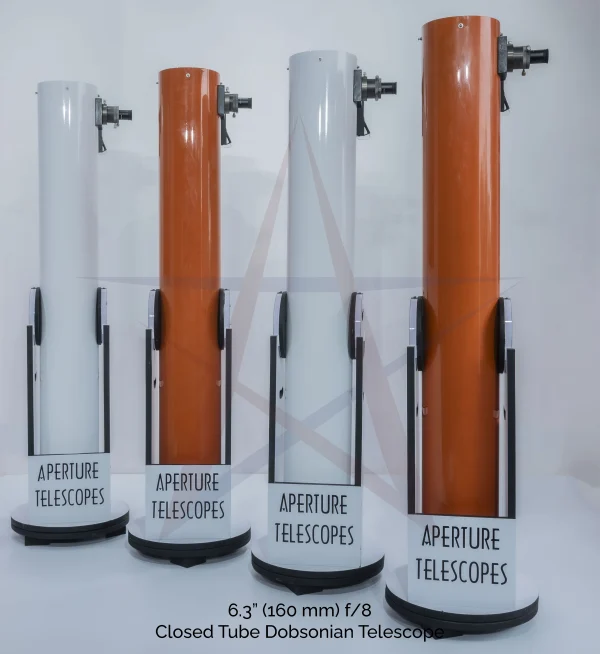
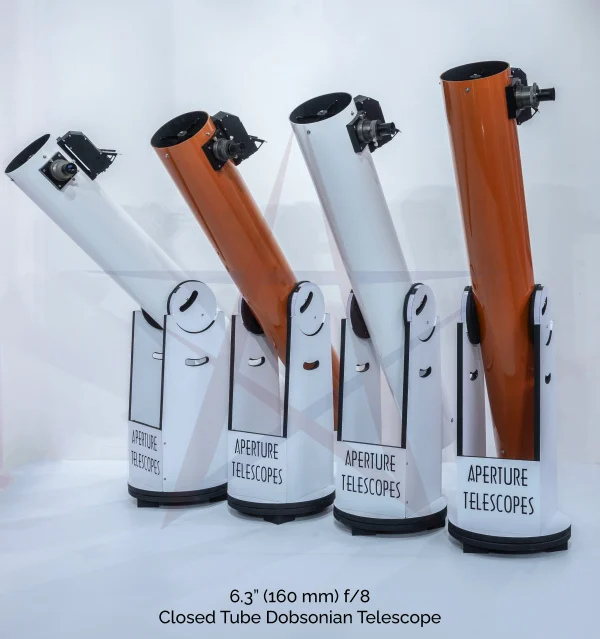
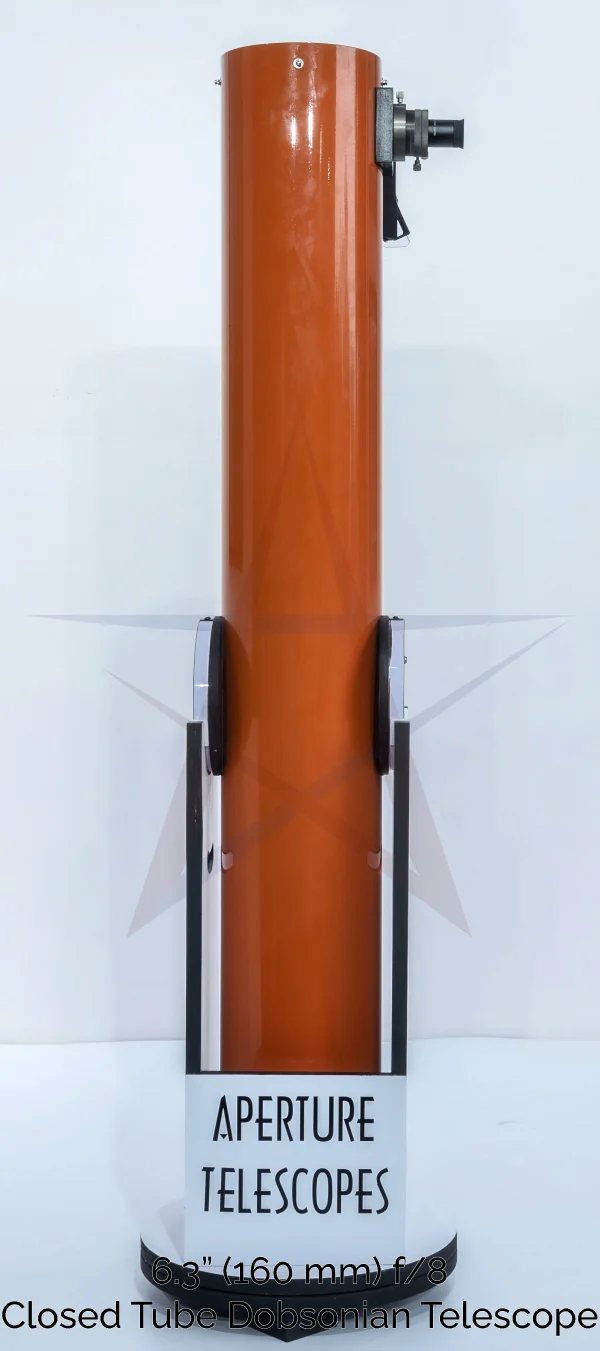
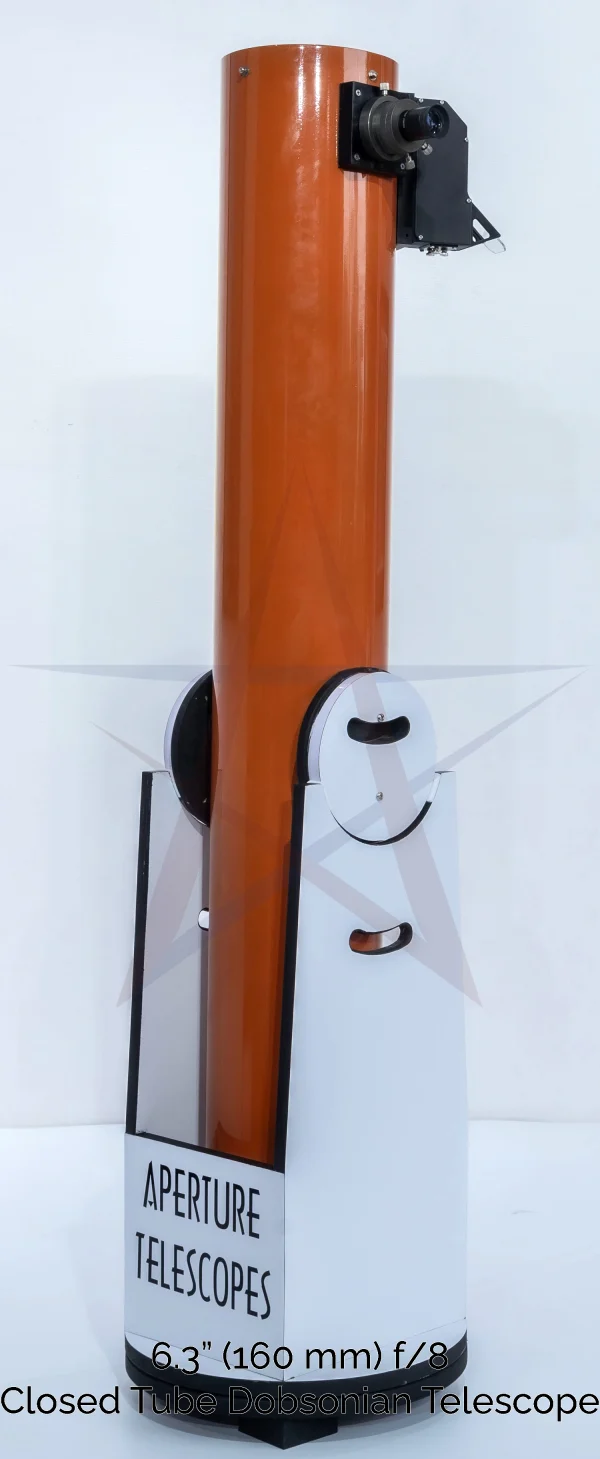
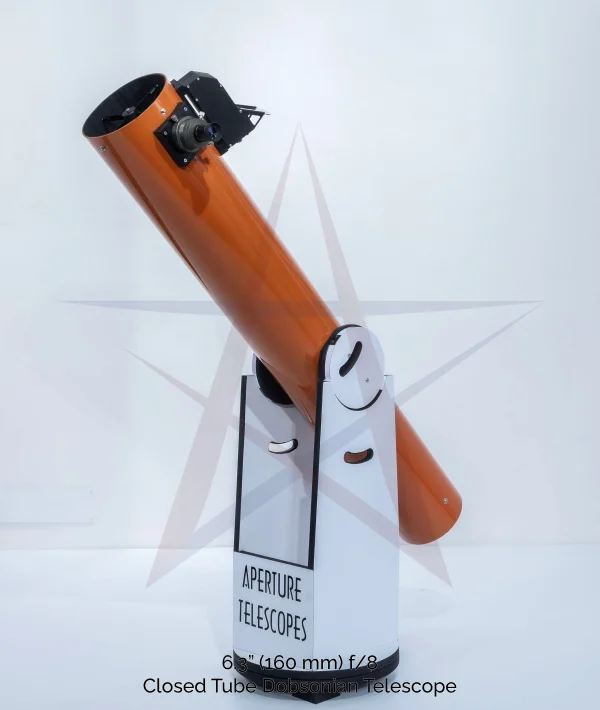
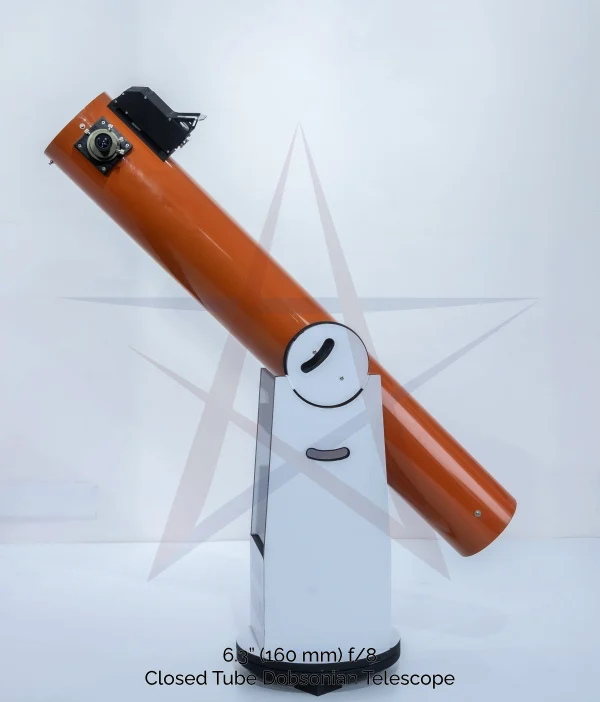
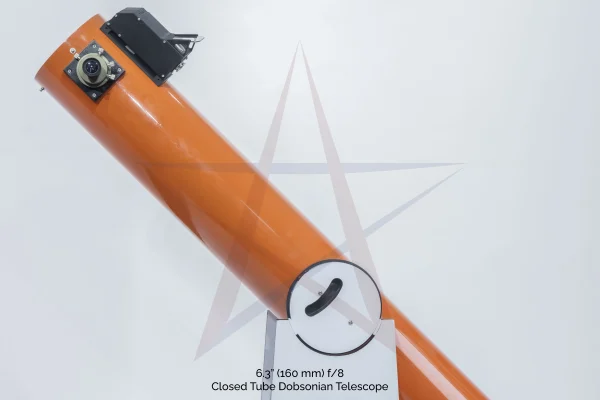
6.3” (160 mm) f/8 Closed Tube Dobsonian Telescope 

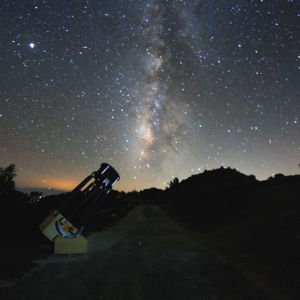
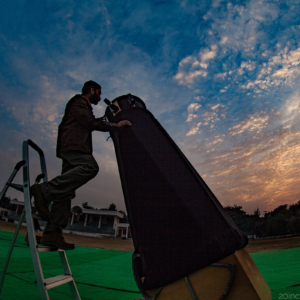
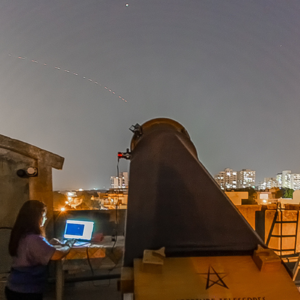
If you live in the city and are looking for a telescope for your child, you are on the right page. The 6.3” (160 mm) closed tube Dobsonian is the perfect telescope for viewing planets in the city conditions with bright light pollution. It features a sturdy, stable Dobsonian mount which is very easy for kids to point and move, making it simple to find objects in the night sky. 
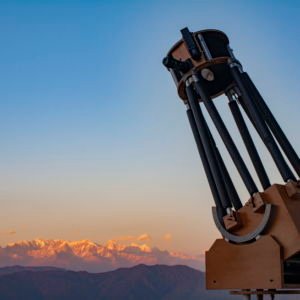
6.3” (160 mm) f/8 Closed Tube Dobsonian Telescope 

If you live in the city and are looking for a telescope for your child, you are on the right page. The 6.3” (160 mm) closed tube Dobsonian is the perfect telescope for viewing planets in the city conditions with bright light pollution. 
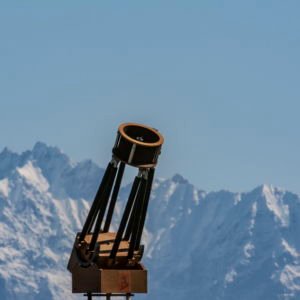
It features a sturdy, stable Dobsonian mount which is very easy for kids to point and move, making it simple to find objects in the night sky. 

Telescope Function – Light Grasp: A telescope’s primary function is to act as a light bucket, gathering significantly more light from faint, distant celestial objects than the human eye, which enables observation of dim objects. Light grasp, or light-gathering power, is directly proportional to the area of the objective lens or mirror (aperture), meaning a larger diameter increases light collection by the square of the aperture. 

Aperture is Key. The light-gathering power is determined by the diameter of the primary mirror or lens. A larger aperture collects more photons, allowing for the detection of fainter objects. 

A telescope's light grasp is measured against the human eyes. Our 160 mm telescope gathers 520 time more light then the average human eye. Our 160 mm Dobsonian telescope light gathering area is 20106 mm2 which is much more than the usual 76mm and 90mm telescopes which are popularly available online market. 

Telescope Function – Focal Ratio: A telescope's focal ratio (f-ratio, (f/#)) is the ratio of its focal length to its aperture. {Focal length / aperture}, defining its "speed" and suitability for imaging or viewing. Low f-numbers (<f/6) offer wide fields and fast, bright images for deep-sky, while high f-numbers (>f/10) provide high magnification for planets. 

The focal ratio of our 160 mm telescope is f/8. This makes the telescope suitable for observing planets in good surface details. Planets like Venus, Jupiter, Saturn, Mars and the Moon are bright enough to be observed comfortably at this focal ratio, revealing great details through the eyepiece. 

The focal ratio of f/8 also helps in another way, it cuts through the city light pollution. The brightness of the city sky is mitigated as the focal ratio is large. The light pollution is like a surface brightness, and is rendered fainter by large focal ratios, and enhancing the planets’ brightness through the eyepiece. 

The focal ratio of f/8 is considered a ‘Slow Focal Ratio’ but it far better for city planet viewing. Fast telescopes often require more complex optics to correct for aberrations (like coma) and have more restricted focus areas. The slow focal ratio like in our 160mm telescope are optically far better performing and minimal aberrations. 

Telescope Function – Focal Length: A telescope’s focal length (f) is the distance between its main optical component, primary mirror and the point where the light rays converge to form a sharp image. It determines the instrument's magnification and field of view, with longer focal lengths providing higher magnification preferred for planetary viewing 

The formula for magnification is  

M= Telescope Focal Length \Eyepiece Focal Length 

Longer focal lengths e.g., 1,000 mm+, provide higher magnification, ideal for observing the Moon, planets, and small, bright objects. Our 160 mm telescope has a focal length of 1300 mm, which is ideal for planet viewing. 

Telescope Mounting: A telescope is a sophisticated optical instrument designed to gather, focus, and magnify light from distant objects, acting as a "light bucket" that reveals celestial details invisible to the naked eye. The mounting is the critical mechanical structure that supports the optical tube and enables precise, stable, and smooth movement for observation. 

The mounting provides a steady platform for the optical tube assembly (OTA), enabling tracking of celestial objects across the night sky.  

Importance of the Mounting: 

Stability and Vibration Reduction. A high-quality mount is crucial to prevent the "hobby killer" of shakiness and wobbling. A sturdy mount reduces "damp-down" time (the time it takes for the image to stop shaking after adjusting the focus). 

Tracking and Tracking Accuracy: As the Earth rotates, objects appear to move across the sky. Proper mounting enables smooth manual following of celestial objects. 

In essence, a telescope is only as effective as its mounting; a superb optical tube on a shaky, poor-quality mount will produce disappointing results. 

Our 160 mm telescope comes complete with the simple and celebrated Dobsonian Mounting. This mount is known all over the world for its simplicity in usage and the super smooth movement of the telescope, to follow any object even at high magnifications. 


6.3” (160 mm) f/8 Closed Tube Dobsonian Telescope 

If you live in the city and are looking for a telescope for your child, you are on the right page. The 6.3” (160 mm) closed tube Dobsonian is the perfect telescope for viewing planets in the city conditions with bright light pollution.